Free play for babies and toddlers
Let them play.
Learning through play.
Children are naturally curious, eager to explore and keen to understand the world around them for themselves.
What if the skills children will need tomorrow don't come from more early learning programmes, but from more free play?
When children play on their own terms, they practise exactly what they will need for life: focusing, making decisions, solving problems, thinking creatively and relating to others. That's why free play is not a break from learning.
It's the space where learning starts from within.
Free, child-led play gives children time, space and trust to follow their own interests and impulses: to observe, try things out, repeat, make decisions and find their own solutions.
That's exactly why we create a calm, prepared environment at Baby Bee for babies and toddlers aged 0 to 5, inspired by Montessori and Waldorf and deliberately without a constant programme or non-stop entertainment.
Fewer rules. More self-efficacy. More room for the child.
How free play supports child development
Play is how children learn.
Play is much more than keeping busy. The American Academy of Pediatrics links developmentally appropriate play with important social, emotional and cognitive skills, as well as with self-regulation and independent problem-solving.
In self-directed play, children can follow their own interests, make decisions, try things out and experience first-hand that their own actions make a difference.
Self-efficacy
"I can make things happen."
Creativity
"I can come up with my own ideas."
Problem-solving
"I can try things out, change them and find my own solutions."
Why we're called Baby Bee
Curious by nature
The name Baby Bee is no coincidence.
Like little bees, children naturally follow their curiosity. They watch, explore, repeat, try things out and turn to whatever sparks their interest in the moment.
We believe this natural motivation doesn't need to be constantly replaced from the outside. When children are given time, trust and the right environment, they can follow their own impulses, notice their interests and needs, and experience again and again:
I can figure things out myself. I can change things. I can make things happen.
That's what Baby Bee is all about for us.
Our play space concept
The Baby Bee way.
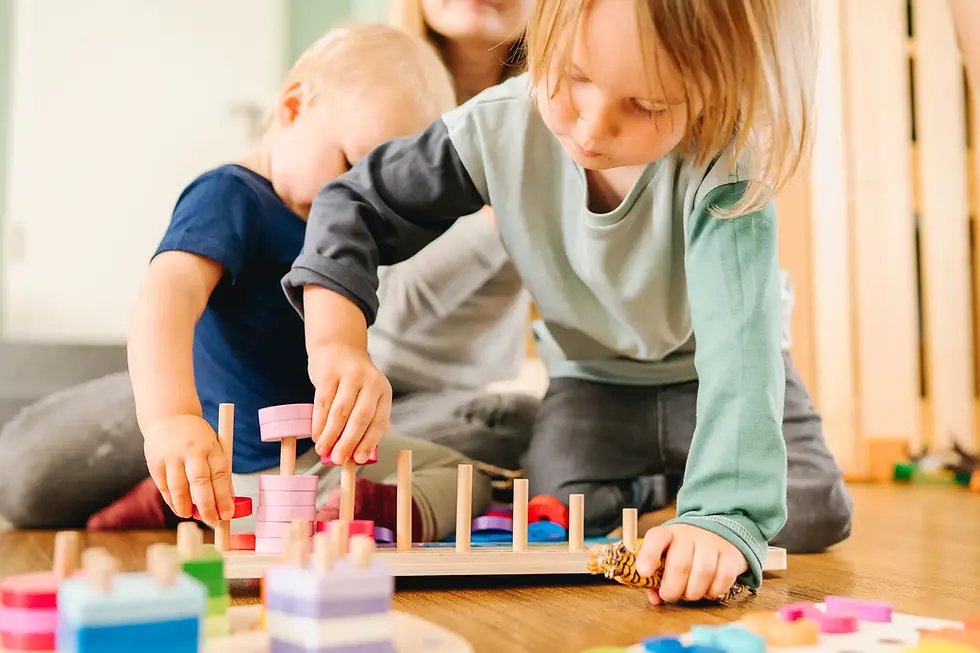
Free play doesn't need as many activities as possible. It needs trust, the right environment and enough room for children to make their own choices.
Free play
Children decide for themselves what to play with, how and for how long.
Prepared environment
Spaces and carefully chosen materials invite children to explore on their own, without dictating how play should unfold.
Connection over entertainment
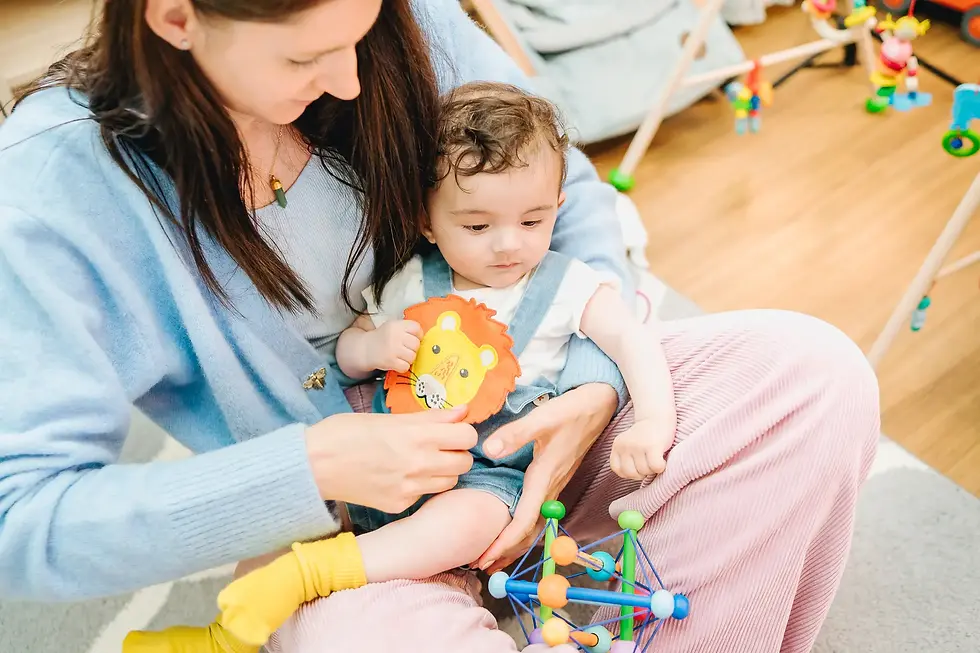
Adults accompany and provide security, without keeping children constantly occupied.
Mixed ages
Children of different ages meet, watch each other and grow together.
Inspired by Montessori, Pikler and Waldorf
Inspired, not defined.
Baby Bee doesn't follow any single educational philosophy. We draw inspiration from different approaches that share one thing: trust in the child's own initiative and development.
Baby Bee is not a Montessori, Pikler or Waldorf facility. These approaches inspire how we design our spaces and how we approach children.
Montessori
Montessori education stands for independence, a prepared environment and materials that invite children to explore and do things for themselves.
Pikler
The Pikler approach stands for trust in the child's independent development, free movement and respectful, attentive accompaniment.
Waldorf
Waldorf education stands for naturalness, imagination, sensory experiences and a calm, thoughtfully designed environment.
The calm alternative to an indoor playground
Less noise. More space to be.
Baby Bee is deliberately designed to be different from a typical indoor playground.
Instead of as many stimuli as possible, we focus on a careful selection of play options. Instead of constant entertainment, on discovering things for yourself. Instead of noise and overload, on an environment where children and adults can settle in.
Not because children shouldn't be loud, wild or boisterous. But because they don't need even more artificial stimuli for that.
The role of parents in free play
Be close. Without taking over.
At Baby Bee, parents and carers are just as much a part of it as the children.
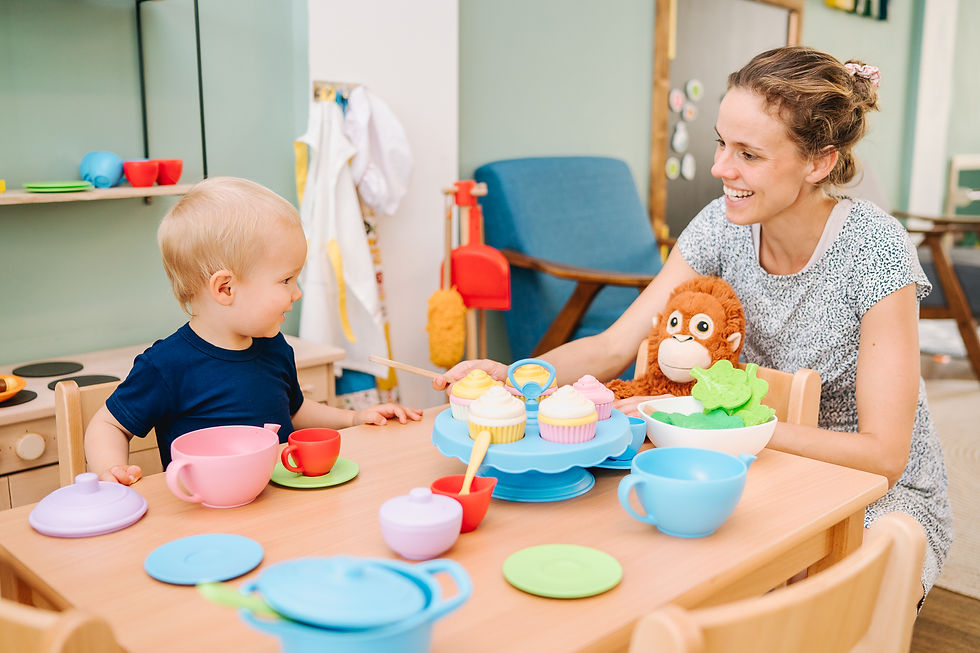
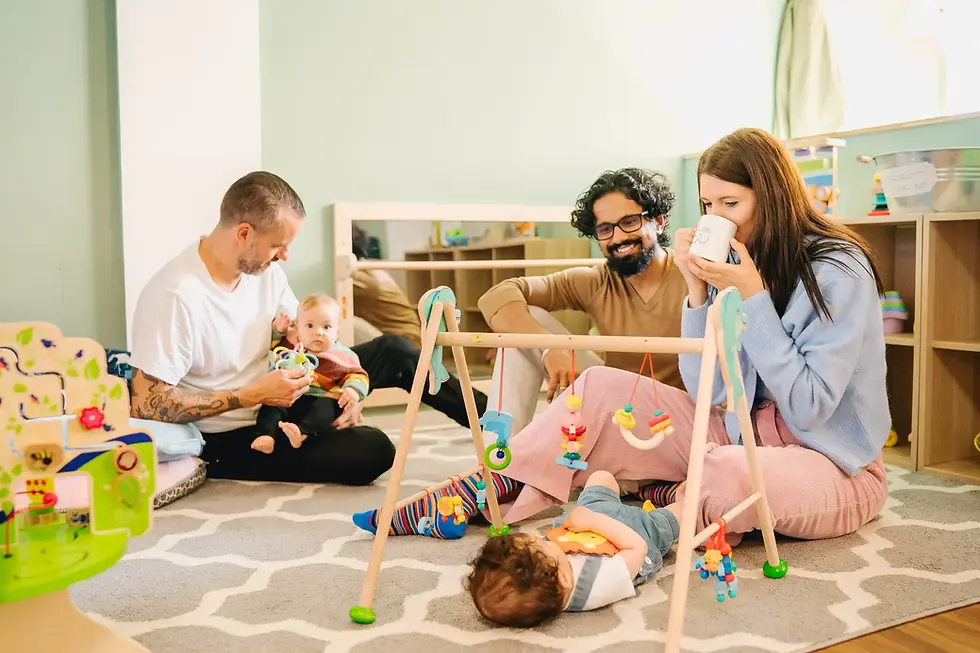
You can join in when connection is what's needed. Watch when your child is absorbed. Help when help is needed. And step back when their own discovery matters more right now.
Not every experience has to be planned or guided by adults.
And sometimes being there simply means staying close, having a coffee and watching your child explore.
Guide, don't steer
Children get support when they need it, and freedom when they can manage on their own.
Space to settle in
Fewer stimuli and a calm environment create room for concentration, connection and deep focus.
Growing together
Children and grown-ups experience Baby Bee together, with time for each other, encounters and connection.